
Granite Worktops Wakefield
Free Consultation
01924-943275
Granite is one of the few worktop materials where no two installations look the same. The slab you choose is the actual piece of stone that ends up in your kitchen, veining, flecking and colour variation included, not a printed pattern matched from a sample chip in a showroom. Our in-house team measures your kitchen, takes you to see and choose that slab in person, cuts it at our own fabrication unit and fits it, so the same people carry the job from the first visit through to the final polish rather than handing you between a sales office, a separate stonemason and a subcontracted fitter.Granite is a natural stone rather than an engineered one, and that changes how it needs to be handled at almost every stage of the job. It's harder and slower to cut than quartz or laminate, considerably heavier to carry and support, occasionally contains natural fissures or soft mineral inclusions that only show up once cutting starts, and needs sealing before it goes anywhere near daily use. We've built our fabrication and fitting process around those specific characteristics for kitchens across Wakefield and West Yorkshire, rather than running granite through the same steps we'd use for a manufactured worktop material.Most enquiries fall into one of two groups: a full kitchen redesign where the worktop is chosen alongside new cabinets, and a worktop-only replacement where the existing units stay and only the surface changes. Both are covered by the same process below, though a worktop-only job puts more weight on the first visit, since we're checking whether cabinets that were never built with stone in mind can take the extra load, rather than specifying them from scratch.
What's Included in Your Granite Worktop Installation
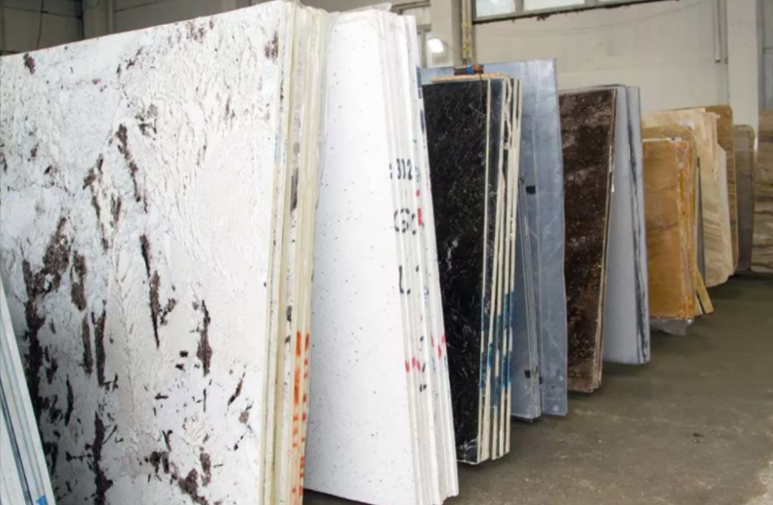
- Free home consultation with measuring, plus a visit to view actual granite slabs at our workshop or supplier's yard, so you're choosing the specific piece of stone that goes into your kitchen, not a colour swatch
- Templating of your cabinet layout in plywood and plastic, with cut-outs, edges and seam positions marked out against the pattern of the slab you've chosen
- Cutting at our fabrication unit using diamond-tipped CNC and water jet tooling - granite is considerably harder than quartz or laminate, so this stage runs at a slower, more controlled cut speed to avoid chipping or cracking the stone
- Sink, hob, tap and appliance cut-outs, cut to your confirmed appliance dimensions before the stone leaves the workshop
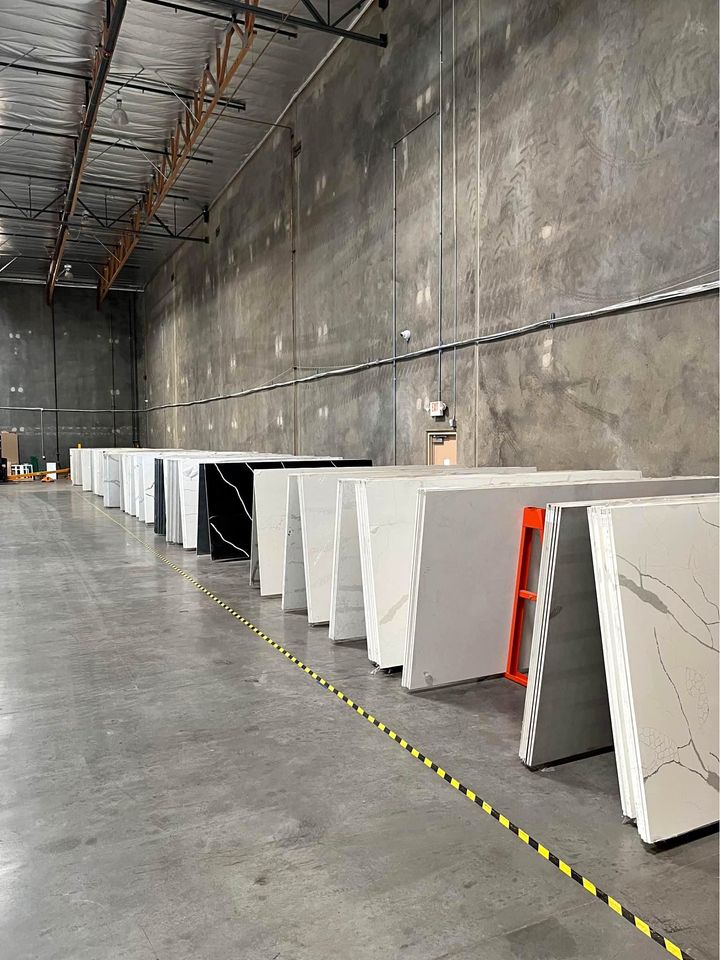
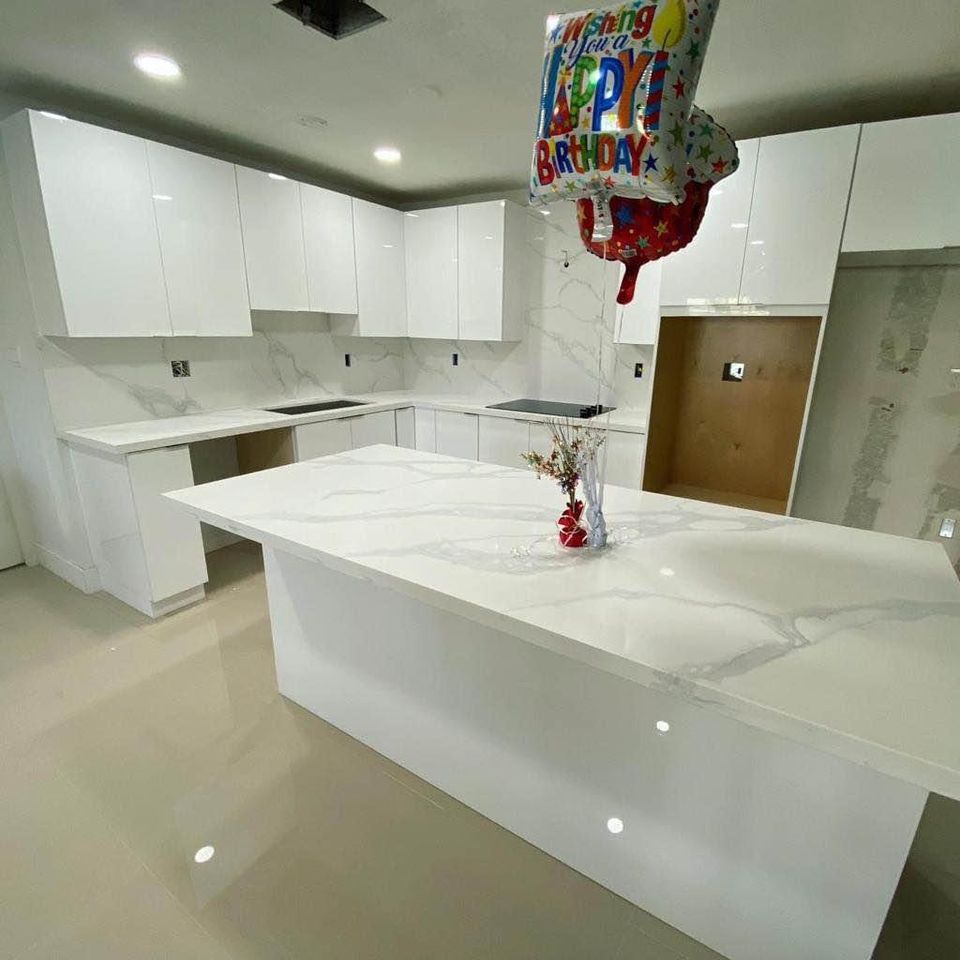
- Seaming of multiple slabs, with the joins positioned and the natural veining matched as closely as the stone allows, then bonded with colour-matched epoxy, sanded and polished flush
- Removal and legal disposal of your old worktop under our registered waste carrier licence
- Delivery, a dry-fit check, sealing (granite is a porous stone and needs this before use) and permanent fixing to your cabinets, plus a clean of the work area on completion
Not Included / Costed Separately
- Extra bracing or support to cabinets where granite's weight calls for it, or repairs to damaged carcasses - checked at the free consultation and quoted separately if needed
- Plumbing reconnection of sinks and taps, or wiring for hobs - our in-house Part P and Gas Safe engineers can carry this out, but it's quoted as part of a wider kitchen fit rather than the worktop price alone
- Same-day fitting - granite is templated first and fabricated off-site, so expect roughly 7 to 10 days between template and installation on a confirmed order
- Bespoke extras like waterfall ends, upstands or matching splashbacks - priced individually once your stone is chosen
- Ongoing re-sealing after the first year - a job you can do yourself, or we can quote to come back and carry out for you
- Matching splashback tiling, replacement cabinet doors or repainting existing units to go with a new worktop - these are handled by our wider kitchen team and quoted alongside the worktop rather than folded into its price
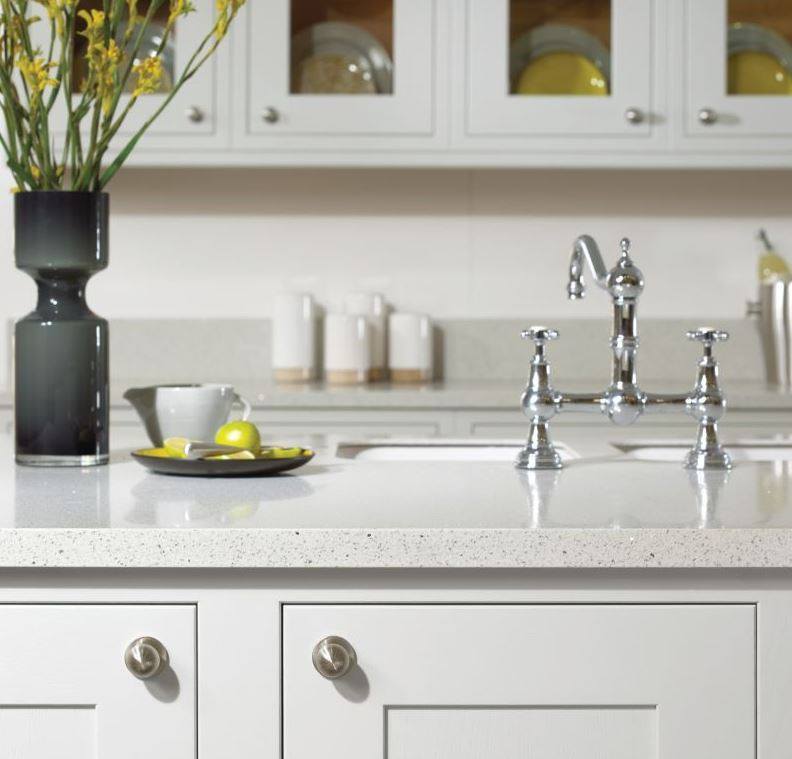
Getting Granite From the Yard to Your Kitchen, Stage by Stage
- First visit and a weight-and-access check: We measure your kitchen and talk through layout, but with granite the first visit also covers two things that don't apply to a lighter engineered worktop: whether your existing cabinets are solid enough to carry the extra weight, and whether a slab weighing several hundred kilos can actually get through your doorways, hallway and into the kitchen without a floor plan needing to change. Older flat-pack units in particular sometimes need extra bracing added before stone goes anywhere near them, and we'll flag that at this stage rather than discovering it on fitting day.
- Seeing and choosing the actual slab: You visit our workshop or supplier's yard and pick the specific slab, not a colour sample, that becomes your worktop. Granite comes out of the ground with its own pattern, so one block of a named granite can look noticeably different from the next: some buyers want heavy veining running through the island, others want a calmer, more uniform-looking cut from the same block. This step doesn't really exist for a manufactured surface like quartz, where the pattern is engineered to repeat consistently regardless of which sheet you're sold.
- Templating against that slab's own pattern: Once your slab is set aside, we template your cabinet layout in plywood and plastic on-site, then take that template back to the slab itself and lay it against the stone to decide exactly where cut-outs, edges and any seams will fall relative to the veining. On a patterned slab, moving a seam or a sink cut-out by even a few centimetres can change which vein lines end up either side of the join, so this is done against the real stone, not a generic layout drawing.
- Cutting, and the judgement calls that come with natural stone: The slab is cut at our fabrication unit on diamond-tipped CNC and water jet equipment, run at a slower, more controlled speed than quartz needs because granite is harder and more prone to chipping under a fast cut. Natural stone occasionally reveals a fissure, a soft mineral streak or a small void once cutting starts that wasn't visible on the slab's face. Our fabricators are the ones who spot that, and because they work for the same company as the person who sold you the slab, a decision on how to handle it - reinforcing the area, adjusting a cut-out position, or in rare cases going back to choose a different section of stone - can be made and communicated to you directly, rather than passed through a third-party supplier.
- Removing your old worktop: Ahead of fitting, your existing worktop is disconnected and removed under our registered waste carrier licence, so it's taken away for legal disposal rather than left for you to arrange a skip or a separate collection.
- Delivery, fitting, sealing and a walk-through: The finished stone is delivered, dry-fit checked against your cabinets, sealed - granite is porous and shouldn't be used before this is done - then permanently fixed. Before we leave, we walk the finished worktop through with you, point out anything specific to how your particular slab needs looking after, such as where the sealant may need topping up first, and clean the work area.
What Drives the Cost of a Granite Worktop, and What It Doesn't
Granite pricing varies more than most worktop materials, mainly because you're buying a specific slab rather than a manufactured product - rarer colours and more dramatic veining cost more than common, uniform granites, and this is decided by the quarry the stone came from, not by us. Beyond the stone itself, price is driven by the total area and number of pieces needed, how many sink, hob and tap cut-outs are required, whether seams are needed for a larger kitchen, the edge profile you choose (a simple pencil edge costs less to machine than a bullnose or ogee), and whether your existing cabinets need extra bracing to take the weight. Compared with laminate and most quartz, granite tends to sit toward the higher end of what we fit, largely because of the slab cost itself and the slower,
more careful fabrication time a harder stone demands.A few costs sit outside the worktop price itself and are worth budgeting for separately: cabinet bracing where an older carcass needs reinforcing before it can take a stone worktop, reconnecting a sink or wiring in a hob once the granite is fitted, and any bespoke extras like a waterfall end or a matching upstand. None of these are hidden, they're simply things that depend on your existing kitchen rather than the worktop material, and they're priced and agreed as part of the same written quotation rather than added on afterwards. Because of that, we don't quote granite from a price list - every kitchen gets a free home consultation, and once you've chosen your slab and confirmed your layout, you'll receive a written quotation covering the full job before anything is ordered or cut.
Granite Compared With Other Worktop Materials We Fit
| Material | Heat resistance | Maintenance | Typical look | Best for |
|---|---|---|---|---|
| Granite | Excellent - natural stone copes well with hot pans, though trivets are still recommended | Needs resealing roughly every 6-12 months; porous surface | Natural veining and flecking, unique to each slab | Traditional and luxury kitchens where a one-of-a-kind stone is the point |
| Quartz | Good, but less heat-tolerant than granite - use trivets | No sealing needed; non-porous resin-bound surface | Consistent pattern, wide colour range | Busy kitchens wanting a uniform, low-maintenance finish |
| Dekton | Excellent - sintered stone copes with direct heat better than granite or quartz | No sealing needed; near-zero porosity, more resistant to UV fading than natural stone | Contemporary, ultra-matte finishes, including large-format slabs with minimal seams | Kitchens with heavy everyday use, or outdoor kitchen extensions |
| Marble | Good heat resistance but stains and etches more easily than granite | Needs regular sealing and careful cleaning around acidic spills | Classic pale, soft veining | Feature islands and period-style kitchens where look matters more than everyday toughness |
| Laminate | Poor - can scorch or blister near direct heat | Wipe-clean, no sealing required | Wide range of printed finishes | Budget-conscious refits or rental properties |
What Happens When the Stone Itself Throws Up a Problem
Granite is a natural product, and every so often a slab reveals something once the saw is running that you'd never see just looking at the face of the stone - a hairline fissure, a soft talc-like streak, or a void that needs working around. This is where it matters that templating, fabrication and fitting all sit inside the same company rather than being split between a sales showroom, an outsourced stonemason and a separate fitting firm booked through an agency. Our fabricators can flag an issue straight to the project manager who took your original measurements, and a decision on how to handle it - reinforcing the area, shifting a cut-out, or going back to the yard for a different section of the same slab - gets made by people who already know your kitchen, not relayed through a
supply chain where nobody has seen your cabinets.The same in-house structure carries through to what happens after the worktop is down. If a hob needs recommissioning or a sink needs reconnecting once the stone is fitted, that's carried out by our own Part P-registered electricians and Gas Safe engineers rather than a plumber or electrician you'd need to source and brief separately, and if your cabinets needed extra bracing to take granite's weight, that's the same joiners who templated the kitchen doing the reinforcing, not a different trade brought in cold. We hold a registered waste carrier licence, so your old worktop doesn't sit on the drive waiting for a skip, and the finished job carries a 5-year guarantee on the fitting and a 2-year guarantee on the stone itself - the practical backstop rather than the main reason to use us, since with granite the more useful protection is having people who can read the stone and make the right call on the day.That judgement comes from the trades doing the work being properly qualified in the first place: our joiners and cabinetmakers are City & Guilds-qualified, so the person who checks whether your cabinets can take a stone worktop is trained to make that call, not guessing from experience alone. It's a small distinction that matters more with granite than with most other worktop materials, because getting a weight or a support decision wrong isn't something you notice until the stone is already down.
Where We Template and Fit Granite Worktops
Most of our granite worktop installations are in Wakefield itself, along with the towns and villages that make up the wider district - Castleford, Knottingley, where our workshop and project team are based on Woodville Way, Pontefract, Normanton, Featherstone, Ossett, Crofton, Walton, Outwood, Stanley, Hemsworth, South Kirkby and Altofts. A fair number of homes across this area are older terraced or stone-built properties with narrow hallways and tight stair turns, which is exactly the kind of access we check for at the first visit given how heavy a granite slab actually is to carry in one piece. Newer estate housing tends to have wider, more open-plan kitchens where access isn't a concern, but the cabinet-strength check still applies regardless of how new the build is, since flat-pack units are common across both older and newer homes alike.Because granite is fabricated off-site and delivered
to your home on the agreed fitting day rather than cut on-site, we also take on larger granite worktop projects further afield across West Yorkshire and South Yorkshire, including Leeds, Barnsley, Doncaster, Sheffield, Rotherham and Manchester. On a longer trip out of the immediate district, delivery and fitting is usually still done in a single visit once the slab is cut, so it doesn't typically add a second day to the job, just a longer drive for our fitters on the day itself. Get in touch to check we can template and deliver to your postcode before booking your free consultation.
Got Questions?
Frequently Asked Questions
If my worktop needs more than one slab, will the seam be visible?
For larger kitchens or L-shaped and U-shaped layouts, we join slabs using a colour-matched epoxy adhesive, then sand and polish the seam so it sits flush with the surrounding stone. It's rarely fully invisible close up - granite has natural veining that won't line up perfectly from slab to slab - but a well-cut seam positioned away from the main work area, such as behind a hob or sink, is barely noticeable in everyday use.
What happens if a fault is found in the stone once cutting starts?
Occasionally a slab that looked sound on the face reveals a fissure, a soft mineral streak or a small void once the saw is into it. When that happens our fabricator stops and talks it through with the project manager who measured your kitchen, and between them they'll decide whether to reinforce the area with a support bar underneath, shift a cut-out slightly to avoid the flaw, or in rare cases go back to the yard for a different section of the same slab. Because everyone involved works for the same company, that decision gets made and explained to you within the same day rather than being relayed through a separate supplier.
What happens to my old worktop once it's removed?
We take it away as part of the installation. Our team holds a registered waste carrier licence, so old worktops, offcuts and fitting debris are removed and disposed of legally rather than left for you to deal with, and the area is left clean once the new worktop is fixed and sealed.
Can sink, hob and appliance cut-outs be added after the worktop is fitted?
No - cut-outs for sinks, hobs, taps and other fittings are marked on the template and cut at our fabrication unit before the stone arrives at your home, using CNC and water jet cutting for a precise fit. This means your sink, hob and any other appliances need to be chosen, or at least their exact model and dimensions confirmed, before templating.
Will hot pans damage or mark my granite worktop?
Granite copes well with direct heat compared to laminate or solid surface materials - briefly resting a hot pan straight from the hob won't scorch it the way it would a laminate worktop. That said, we'd still recommend a trivet or pan stand for anything left sitting for a while, because repeated heat in the same spot can eventually affect the sealant in that area, even if the stone itself is unaffected.
How often does a granite worktop need resealing?
Most granite worktops need resealing roughly once a year, though it depends on the specific stone - some darker, denser granites are less porous and can go longer between reseals. A simple way to check is to splash a little water on the surface: if it beads up, the seal is still doing its job; if it soaks in and darkens the stone, it's time to reseal. It's a job you can do yourself with a granite sealer from a hardware shop, or we can quote to come back and do it for you.
Is granite heavier than quartz, and will my existing cabinets take the weight?
Yes - granite is generally heavier than quartz for the same thickness, because it's a solid natural stone rather than a resin-bound composite. Most standard kitchen cabinets are built to take a stone worktop, but if your units are older, flat-pack, or already showing signs of sagging, we'll check this at the free consultation and let you know if extra bracing is needed before granite goes on top - it's far cheaper to reinforce a carcass beforehand than to deal with a worktop that's dropped after fitting.
Can lemon juice, wine or vinegar stain or etch my granite worktop?
Granite is more resistant to acidic spills than marble, but it isn't immune - left to sit, lemon juice, wine or vinegar can dull the sealant and, over time, mark a poorly sealed surface. Wiping up spills reasonably promptly and keeping the sealant topped up is enough to avoid problems for most households; it's not a worktop you need to treat with the same caution as marble, but it isn't entirely stain-proof either.
Should I choose a polished or honed finish, and does it change how the worktop needs looking after?
Polished granite has the glossy, reflective surface most people picture, and it's slightly easier to keep clean because the tighter surface is less inclined to hold onto marks. Honed granite has a smooth, matte finish - it hides fingerprints and light scratching better, but being marginally more porous, it benefits from slightly more frequent sealing. Both are fitted the same way; it's a finish choice, not a durability trade-off.
Can I keep my existing cabinets and only replace the worktop?
Yes, this is one of the more common jobs we do. The main thing we check at the free consultation is whether the carcasses underneath are solid enough to take granite's weight, since some older or flat-pack units were never built with a stone worktop in mind and need extra bracing added first. If your cabinets are sound, there's no need to replace them just because you're upgrading the surface on top.
How long does the whole job take, from first enquiry to a finished worktop?
The free consultation and slab viewing usually happen within a week or two of getting in touch, depending on how quickly you want to move. Once you've chosen your slab and signed off the quotation, templating is booked in, and fitting typically follows 7 to 10 days after that, since the stone has to be fabricated at our workshop in between. Fitting day itself is usually completed in a single visit unless bracing work or wider kitchen fitting is involved.
Do I need to move out of my kitchen while the granite is being fitted?
No, most of the disruptive work happens away from your home, at our fabrication unit, rather than on-site. The visits to your kitchen are the initial measure, the template, and then fitting day itself, when the old worktop comes out and the new stone goes in. Fitting day is the one that puts your kitchen out of action, and for a straightforward worktop swap that's usually completed within a day; if bracing or plumbing and electrical reconnection are also needed, we'll tell you at the consultation roughly how much longer to allow.
What's the difference between choosing granite from a sample and choosing the slab in person, and does it really matter?
A sample chip shows you a colour and a rough pattern, but granite is a natural material, so the actual slab can vary in how heavily veined, spotted or uniform it is, sometimes quite noticeably, even within the same named granite. Choosing the slab in person at the yard means you're picking the piece that's set aside for your kitchen, not hoping the one that arrives looks like the sample. It takes a bit more of your time upfront, but it avoids the more common cause of disappointment with natural stone worktops, where the finished job doesn't quite match what the customer pictured from a small sample.
Can a chip or crack in the granite be repaired once it's fitted, or does the whole worktop need replacing?
Small chips and hairline cracks in granite can usually be filled and polished back to a near-invisible finish with a colour-matched resin, without needing to remove the worktop. A larger crack running through a stressed area, such as near a sink cut-out or a seam, is more of a judgement call, and it's worth getting a fabricator to look at it in person rather than guessing from a photo, since what looks serious is sometimes only a surface-level chip, and what looks minor can occasionally be structural. If a repair genuinely isn't practical, replacing just the affected section is possible where a seam already exists nearby, though matching the original slab's veining exactly usually isn't.
Do you fit granite for kitchen islands, or only perimeter worktops?
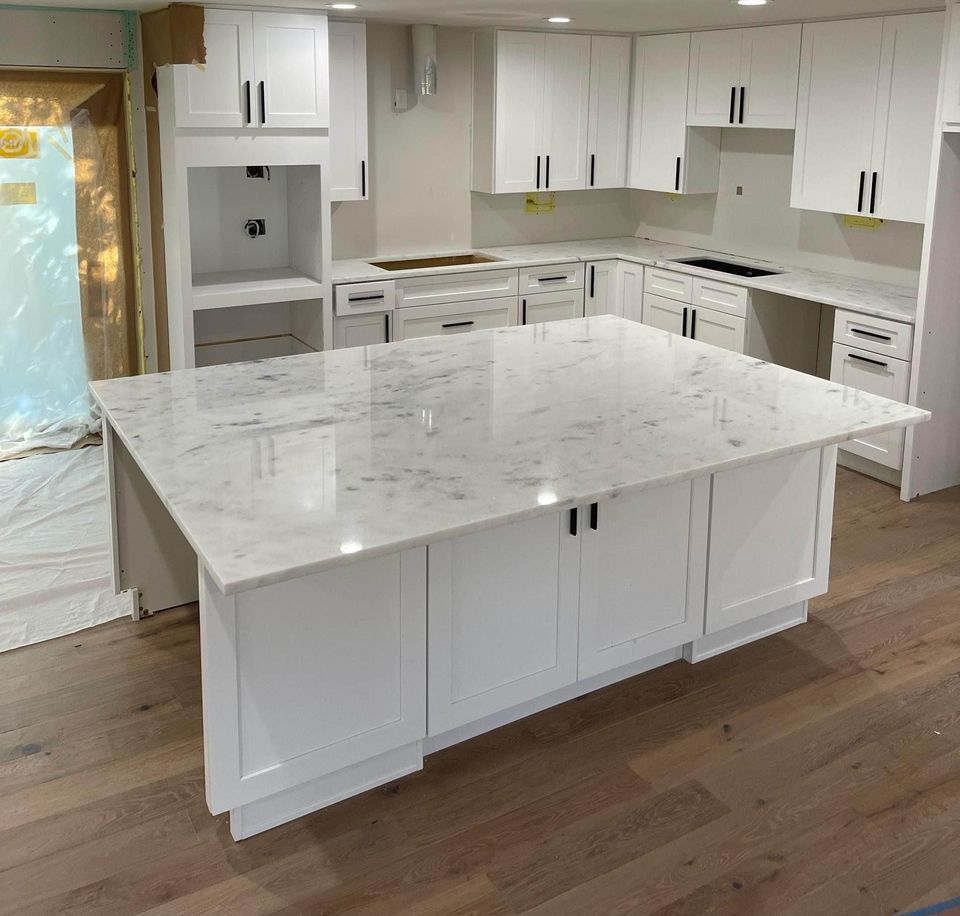
Yes - islands are templated and fitted the same way as perimeter runs, though an island often has no wall to lean on during transport and fitting, and sometimes carries a larger single piece of stone for a seamless look, so it can call for extra hands on fitting day and occasionally a support bracket built into the cabinet below. We'll flag anything island-specific at the free consultation once we've seen the layout in person, since it changes both the weight distribution and how the slab needs to be carried into the room.
Ready to See Granite Slabs for Your Own Kitchen?
The next step is a free, no-obligation consultation where we measure your kitchen, check access and cabinet strength, and you can look at actual granite slabs rather than a small sample. From there you'll get a written quotation before anything is ordered or cut. The sooner your slab is chosen, the sooner it's set aside for you rather than sold on to someone else, so it's worth getting the consultation booked in early if you've settled on granite. Get in touch to arrange a visit. If you're still weighing up granite against quartz or another surface, our full range of kitchen worktop materials is worth a look before your visit, and it's still worth mentioning at the consultation too - we'll talk you through the practical differences for your own kitchen rather than steering you toward whichever material happens to be easiest for us to fit.
In-House Team • 5-Year Guarantee • Licensed Waste Removal
Quick Free Estimate - No Obligation
Fully Insured • Response within 15 mins
🔒 Your details are safe with us. No spam, ever.